Why Your Aircon Needs Regassing
Refrigerant is not fuel — a sealed aircon does not use it up. If your unit is low on gas, it is because it is leaking somewhere: a flare joint, a corroded coil, or a cracked pipe. That is why our Stellenbosch aircon team pressure-tests the system before putting gas in. Regassing a leaking unit without finding the leak means you pay for the same job again in a few months, and venting refrigerant is bad practice on top of being a waste of your money.
What the Job Involves
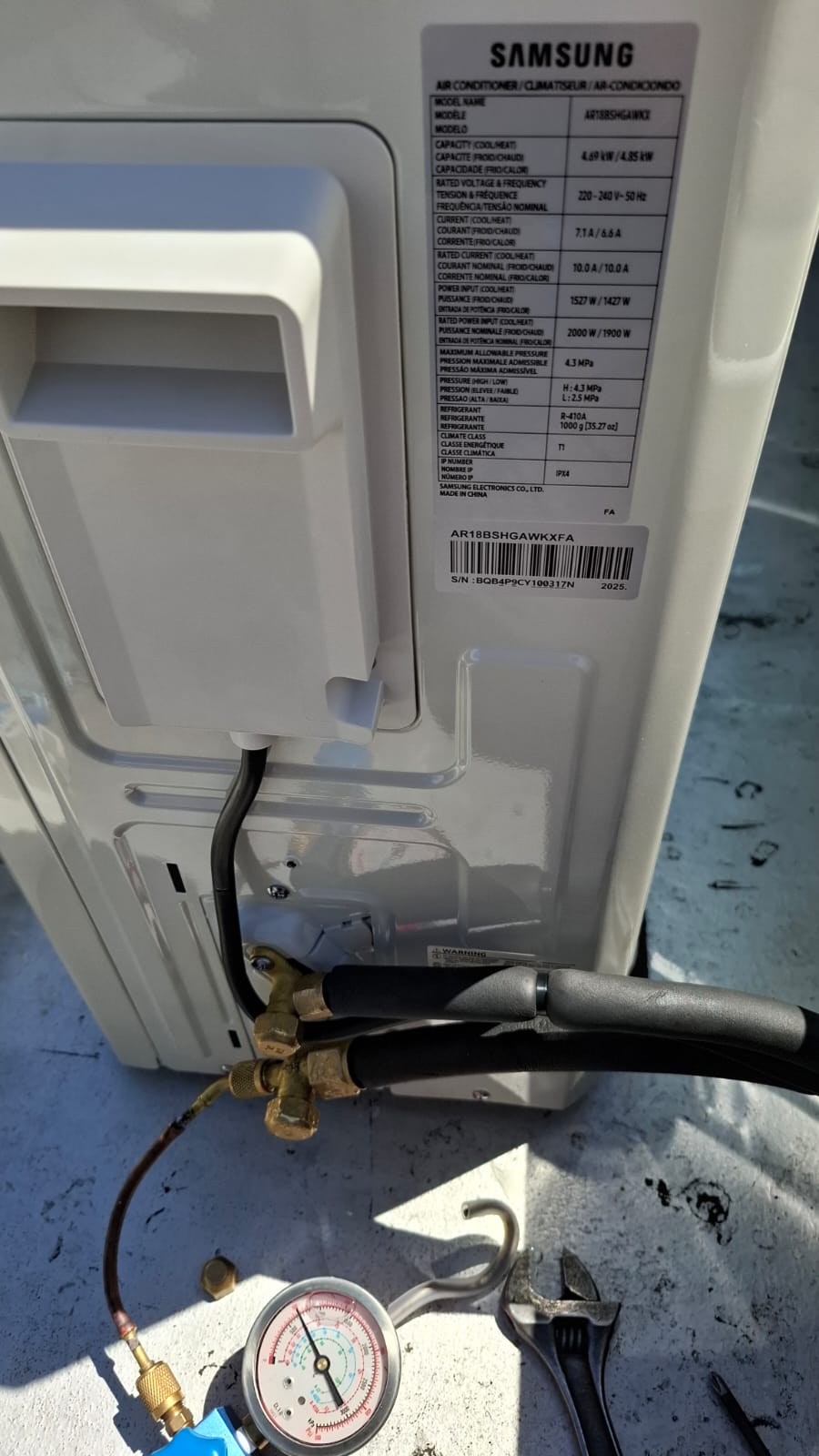
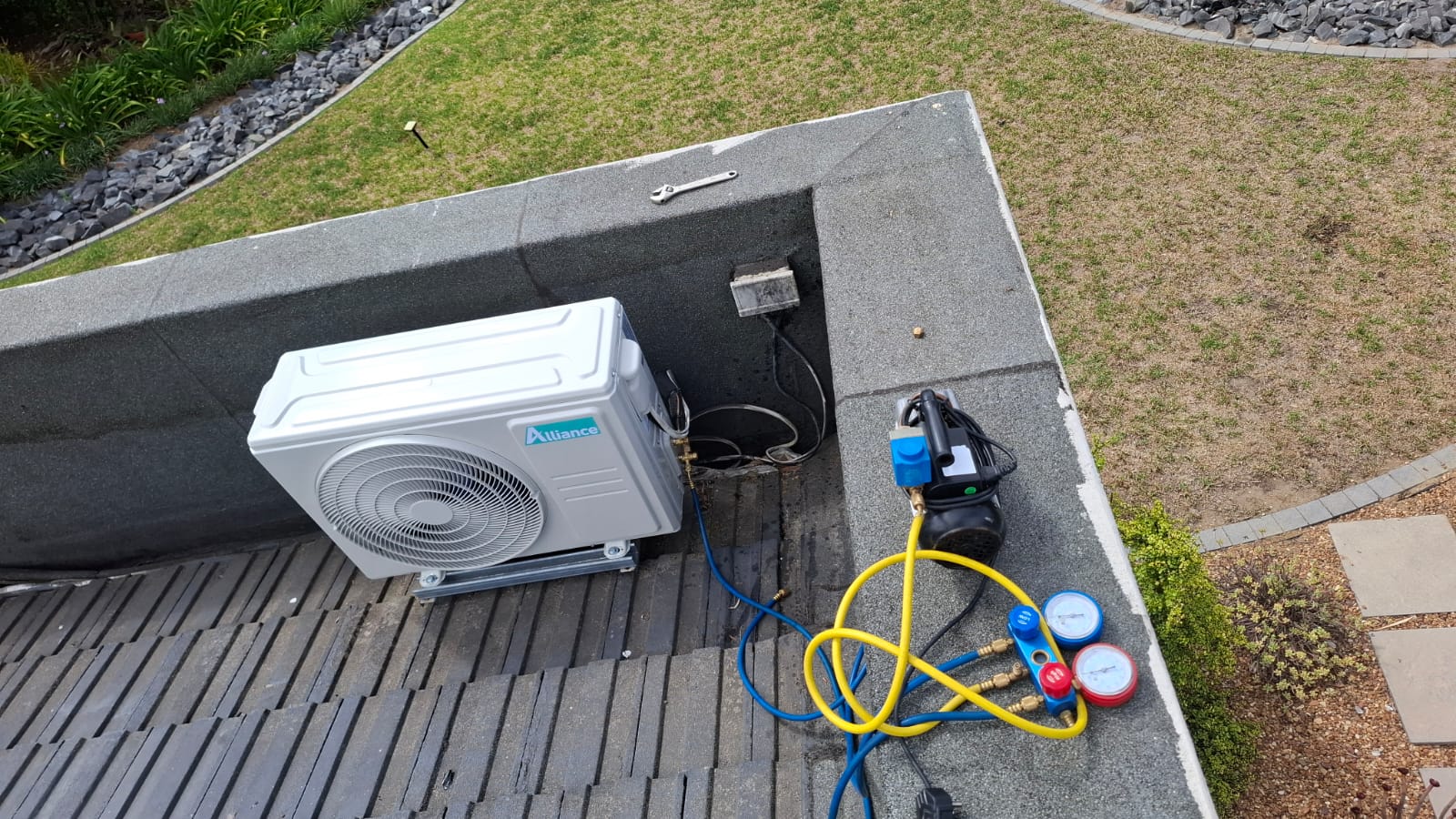
We check the running pressures and temperature split, trace the leak with nitrogen or an electronic sniffer, repair or re-flare the joint, vacuum the system down to remove moisture and air, then charge it to the manufacturer's stated weight — not by guesswork. Most homes in Stellenbosch run R32 or the older R410A; we carry both. Gas is charged by weight, not per job: R480 a kilogram for R32 and R410A, on top of a R580 call-out. How much a unit holds depends on its size — a 9,000 to 12,000 BTU split takes 0.8 to 1 kg, which works out around R960 to R1,060 all in; an 18,000 to 24,000 BTU unit takes 1.4 to 1.8 kg, about R1,250 to R1,450; a 36,000 BTU unit takes 2.3 to 2.7 kg. Older R22 systems are R550 a kilogram — that refrigerant is being phased out and is getting harder to source, which is often the point where a new unit beats refilling the old one.
When a Regas Is Not the Answer
Sometimes warm air has nothing to do with gas — a blocked filter, a failed capacitor, a dying compressor or a stuck reversing valve all look identical from the couch. We will tell you when a regas would be throwing money at the wrong fault, and quote the actual repair instead.