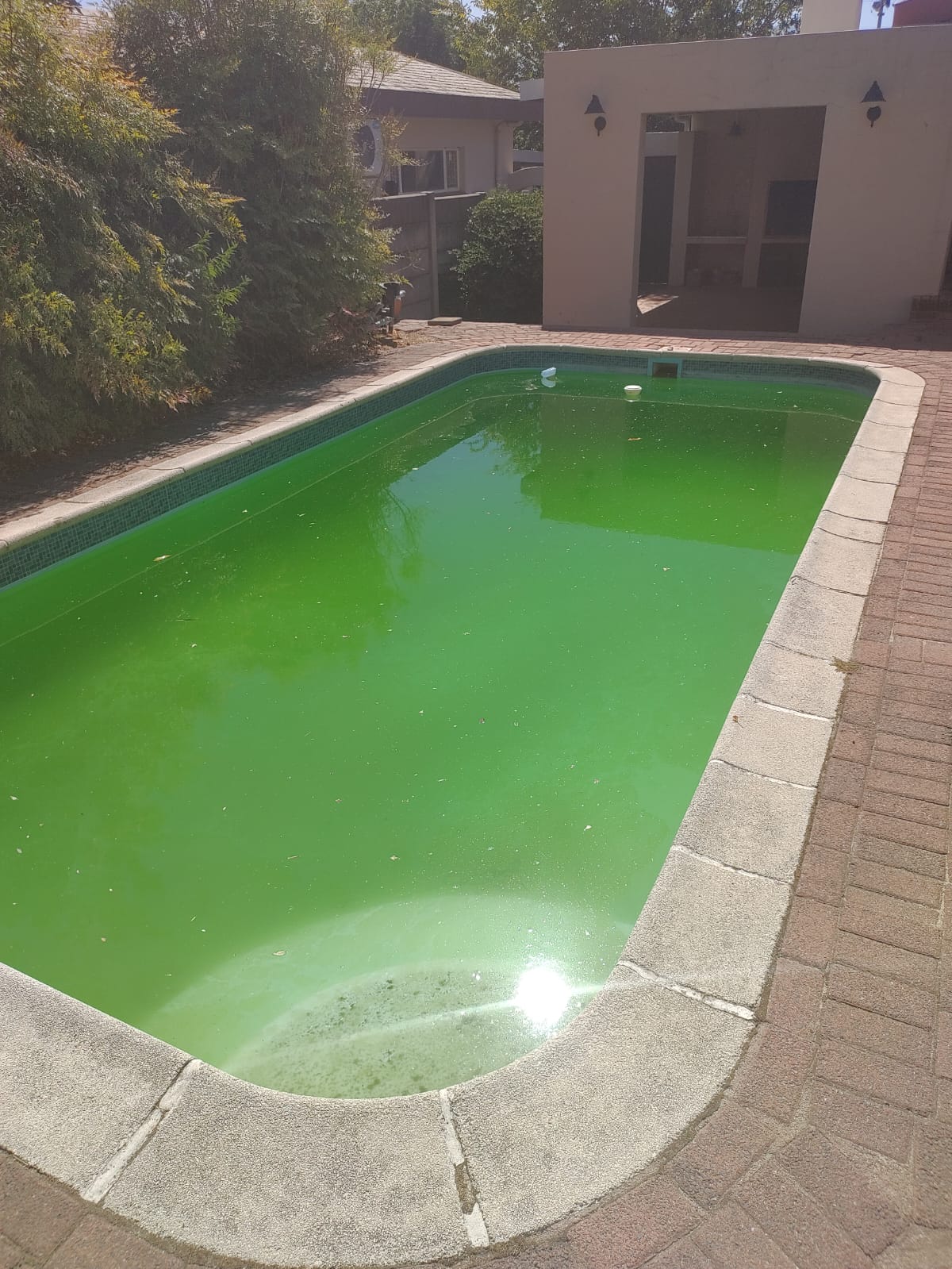
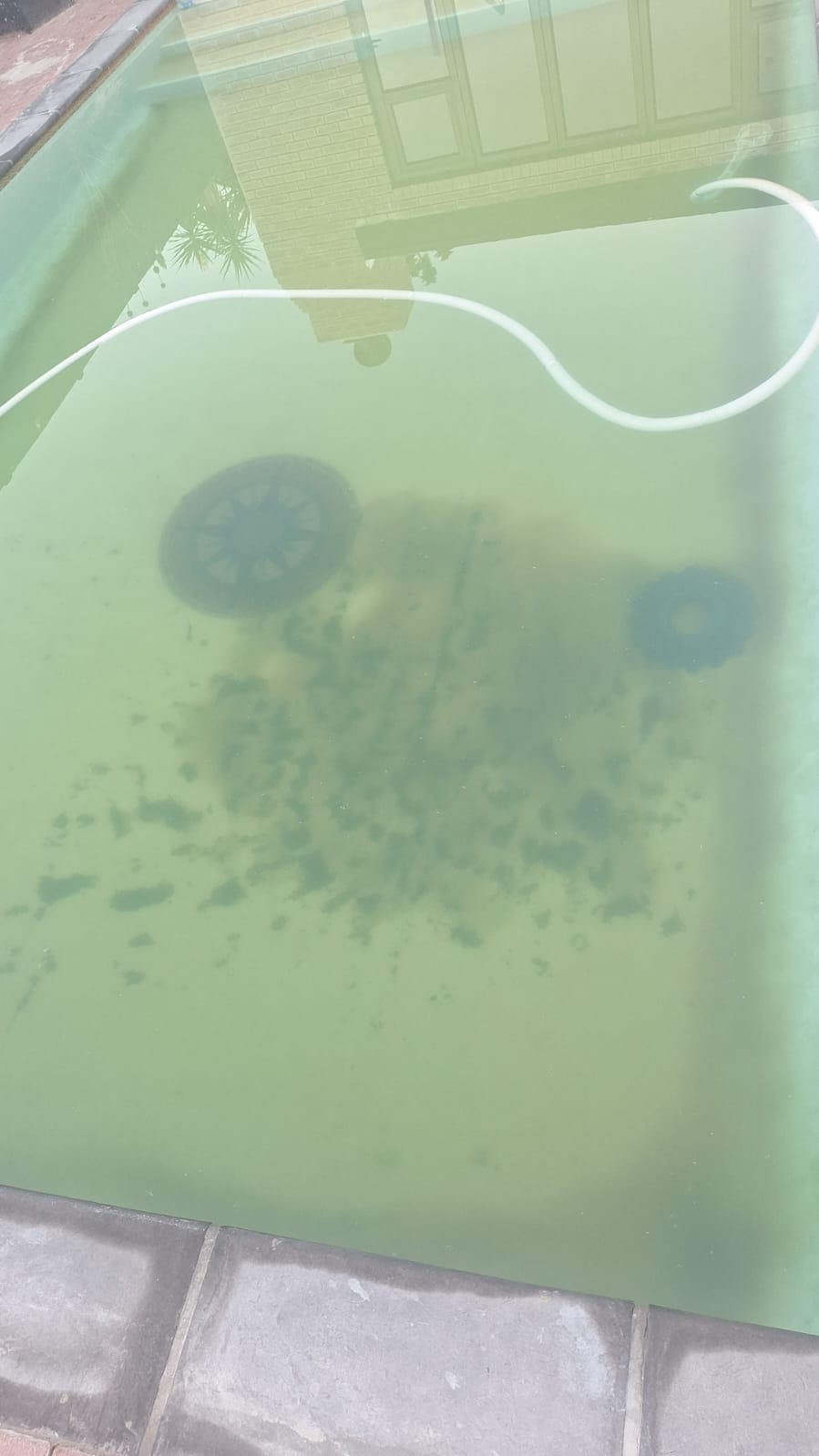
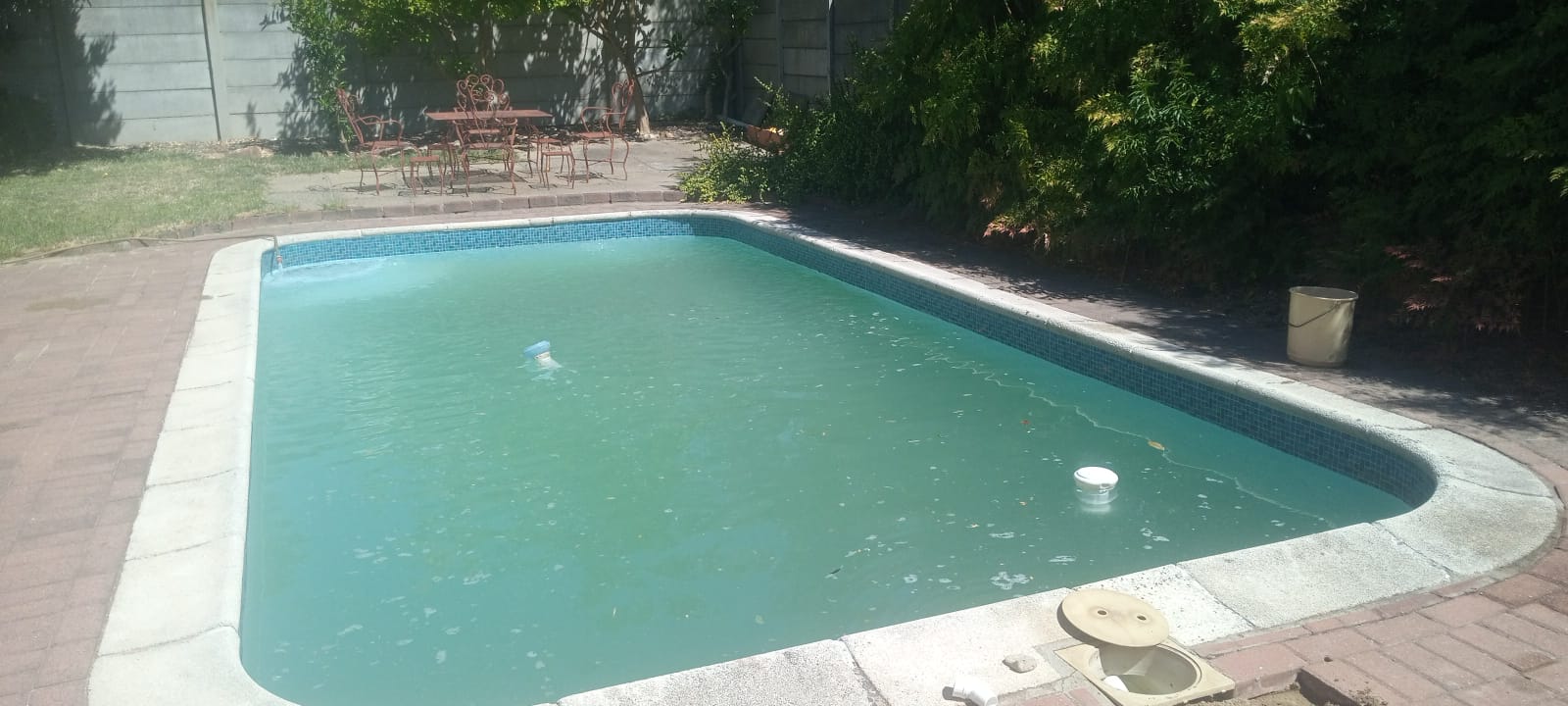
Why Your Pool Went Green
Algae is always in the water; chlorine is the only thing keeping it invisible. The moment free chlorine drops below roughly one part per million, a warm pool in Parow can turn from clear to green in under two days. The usual reasons our Parow pool maintenance team finds are a winter of no dosing, a stabiliser level too low so the sun burns the chlorine off by mid-morning, pH that has drifted high enough to make the chlorine that is there barely work, a pump running too few hours a day, or a load of leaves and rain after a storm. A green pool is a symptom of the chemistry, not a cleaning problem — which is why scooping and vacuuming alone never fixes it.
What a Recovery Actually Involves
We test first, then correct the pH before adding anything else: chlorine loses most of its killing power above pH 7.8, so shocking a pool with high pH mostly wastes the chemical. Then a shock dose, and brushing — the walls, steps and waterline by hand, because algae grips the plaster and a chemical will not lift a green film off marbelite on its own. The filter then runs long hours to pull the dead algae out, and gets backwashed repeatedly as it loads up; a clarifier or flocculant helps where the water stays milky. We retest and rebalance at the end, because a shock dose leaves the water nowhere near swimmable-balanced. Most pools go from green to swimmable in two to five days depending on how far gone they are, the pool volume and the state of the filter. A pool that looks clear again after a single visit is usually about to go green a second time.
The Numbers We Balance To
So you can hold anyone to it, including us. Free chlorine 1 to 3 ppm. pH between 7.2 and 7.6. Total alkalinity 80 to 120 ppm, which is what stops the pH swinging every time it rains. Cyanuric acid, the stabiliser that stops the sun destroying your chlorine, 30 to 50 ppm on a normal chlorine pool and 60 to 80 ppm on a salt pool with a chlorinator cell. One number is worth understanding as an owner: nothing lowers cyanuric acid. No chemical exists for it. If the stabiliser has climbed too high — which happens in pools kept going on stabilised granules year after year — chlorine stops working properly no matter how much you add, and the only remedy is to dilute it with a partial drain and refill.
When Draining Beats Recovering
Sometimes the honest answer is a refill. Stabiliser far too high, black-spot algae rooted into marbelite, or water so far gone that the chemicals would cost more than the water does. We do not reach for it first — this is the Western Cape and nobody drains a pool lightly — but we will tell you when a recovery is money spent twice. Where a pool is being emptied anyway, that is also the right moment to deal with cracks, waterline tiles or a failing weir instead of paying for access twice.
Keeping It Clear Afterwards
A recovered pool needs the filter running long enough for the water volume, brushing that reaches the steps and waterline rather than just the floor, and dosing that holds free chlorine in range rather than spiking and crashing it. Through a Parow summer that is usually a weekly service; through winter, fortnightly is normally enough. Getting a pool green a second time in one season is nearly always a run-time or stabiliser problem rather than bad luck.